
Shockwave vs. Laser Therapy for Shoulder Pain in Calgary
Reaching for a high shelf, putting on a jacket, or finding a comfortable sleeping position should not cause a sharp pinch in your shoulder. When rotator cuff pain or shoulder tendinopathy lingers, it quickly disrupts your daily life. Resting the joint might provide temporary relief, but it rarely solves the underlying tendon issue.
At Encompass Sports Therapy in Calgary, we use advanced treatment technologies to help you heal faster. Two of our most effective options for treating shoulder tendon pain are shockwave therapy and laser therapy. Both tools offer excellent, evidence-informed paths to recovery, but they function in completely different ways.
If you want to know which treatment suits your specific shoulder pain, this guide breaks down how each therapy works, their key differences, and how they fit into a complete recovery plan.
What is Shockwave Therapy?
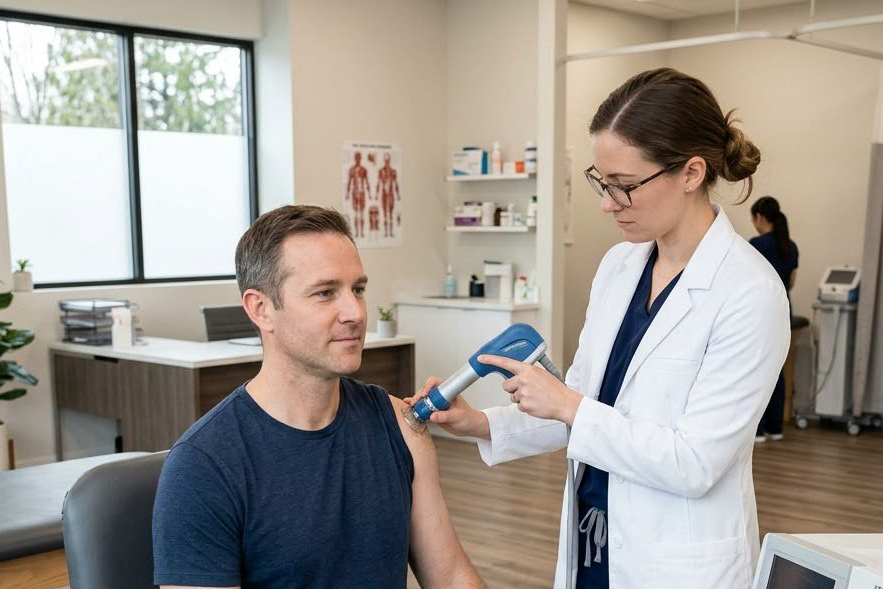
Shockwave therapy uses a specialized device to send acoustic energy waves deep into your injured shoulder tendons. It does not use electrical shocks. Instead, the machine uses rapid mechanical pulses to create physical stimulation inside the damaged tissue.
These sound waves trigger a process that encourages your body to form new blood vessels. This increased blood flow brings fresh oxygen and nutrients to the stubborn tendon, restarting your natural cellular repair cycle. Shockwave therapy works incredibly well for breaking down old scar tissue and stimulating recovery in rotator cuff tendons that have stopped healing on their own.
What is Laser Therapy?
Class 4 Laser Therapy takes a different path by using specific wavelengths of light energy. This process penetrates deep into your shoulder muscles and joint capsule without creating any physical impact or friction.
When this targeted light energy reaches your damaged cells, it boosts their energy production. This reaction accelerates tissue healing, rapidly decreases local inflammation, and soothes irritated nerves. Laser therapy provides a gentle, soothing warmth during your session, making it a great choice for highly sensitive or acutely inflamed shoulders.
Key Differences: Shockwave vs. Laser
While both therapies aim to heal your rotator cuff, they rely on different mechanisms and feel completely different during a treatment session.
- Treatment Mechanism: Shockwave uses mechanical sound waves to physically stimulate your tissues. Laser uses light energy to create a photochemical healing reaction inside your cells.
- Sensation: Shockwave therapy can feel intense, similar to a deep tissue massage over a tender muscle knot. Laser therapy is completely painless and usually feels like a gentle, relaxing warmth over your shoulder.
- Best Use Case: Shockwave excels at treating chronic, stubborn, or calcified tendon issues that have bothered you for months. Laser therapy works best for acute flare-ups, severe swelling, or highly sensitive nerve pain.
Which Treatment is Right for Your Rotator Cuff?
Choosing between shockwave and laser therapy depends entirely on the current state of your shoulder pain.
If you have lived with a dull, persistent ache in your shoulder for six months and your tendon feels thick and stiff, shockwave therapy is likely the better choice. The mechanical waves will help break the cycle of chronic pain.
If you recently strained your shoulder and the joint is swollen, throbbing, and highly sensitive to touch, laser therapy provides a gentle way to calm the acute inflammation before moving on to deeper treatments.
In some cases, our practitioners use both therapies at different stages of your recovery. We might start with laser therapy to reduce the initial swelling, then switch to shockwave therapy to remodel the tissue once your joint feels less sensitive.
Building a Complete Active Rehab Plan
Technology helps accelerate your healing, but it is only one part of the solution. At Encompass Sports Therapy, we integrate these therapies into a broader active rehabilitation plan to ensure your shoulder pain stays away for good.
To fully support your healing tendon, we combine technology with hands-on care and targeted movement:
- Active Release and Manual Therapy: We release tight muscles in your chest and neck that pull your shoulder forward, reducing mechanical stress on the joint.
- Dry Needling: We target deep muscle spasms in your upper back to relax the tissues surrounding your shoulder blade.
- Kinesiology Taping: We apply supportive tape to gently unload your rotator cuff, allowing you to move with less pain.
- Chiropractic and Physiotherapy Support: We ensure your mid-back and neck move correctly, giving your shoulder a solid mechanical foundation.
- Exercise Rehabilitation: We guide you through specific strengthening exercises to rebuild your tissue capacity, ensuring your shoulder can handle daily physical demands.
You deserve to lift, reach, and move without wincing. By combining the right technology with a targeted exercise plan, we help you regain a strong, pain-free shoulder. Book an assessment with our Calgary clinical team today, and let us help you find the best treatment for your rotator cuff.