
Shockwave Therapy for Sports Injuries in Calgary
Navigating a sports injury can be a frustrating experience, especially when it keeps you away from the activities you value. Whether you are dealing with a persistent ache in your Achilles tendon or sharp heel pain after a run, finding an effective, evidence-informed treatment is an important step in your rehabilitation. One approach that has gained significant traction for managing chronic tendon issues and soft tissue injuries is shockwave therapy.
Shockwave therapy is a non-invasive treatment option designed to stimulate the body’s natural healing processes. When combined with a comprehensive, movement-based recovery plan, it can be a valuable tool in managing stubborn sports injuries. In this guide, we will explore what shockwave therapy is, how it supports tissue recovery, the common sports injuries it helps manage, and what you can expect during a session at Encompass Sports Therapy in Calgary.
What is shockwave therapy?
Despite its intense-sounding name, shockwave therapy—specifically Extracorporeal Shockwave Therapy (ESWT)—does not involve electrical shocks. Instead, it utilizes high-energy acoustic (sound) waves that are delivered through the skin to the targeted injured tissue.
Originally developed in the medical field to break up kidney stones, the technology was later adapted for musculoskeletal and sports rehabilitation. The acoustic waves create micro-trauma at the cellular level. This controlled stimulation prompts the body to initiate a natural localized healing response. By targeting areas where the healing process has stalled or slowed down, shockwave therapy helps kickstart the biological mechanisms necessary for tissue repair.
This treatment is highly individualized and is rarely used in isolation. Instead, it serves as a powerful adjunct to active rehabilitation and exercise therapy. At Encompass Sports Therapy, our approach focuses on collaborative care, meaning we use modalities like shockwave therapy to reduce pain and improve function so you can actively participate in your progressive loading and strengthening exercises.
How does shockwave therapy help with sports injuries?
When you sustain a sports injury, your body enters a healing cycle. However, in cases of chronic repetitive strain—such as tendinopathy—this healing cycle can become disrupted, leading to disorganized tissue and persistent pain. Shockwave therapy addresses this by influencing the tissue in several physiological ways:
- Stimulating new blood vessel formation
Nutrient blood flow is necessary to start and maintain the repair processes of damaged tissue. The acoustic waves create capillary micro-ruptures in tendon and bone, which stimulates the growth of new blood vessels (neovascularization). This improves the blood supply and oxygenation to the treated area, supporting faster tissue regeneration. - Reversing chronic inflammation
Mast cells are one of the key components of the inflammatory process. Their activity may be increased by using acoustic waves. This helps shift a chronic, stagnant inflammatory process into an acute phase, allowing the body to recognize the injury and process it through the normal healing stages. - Reducing pain signals
Substance P is a neurotransmitter that relays pain information through the nervous system. The acoustic waves generated by shockwave therapy can lower the concentration of Substance P in the affected tissue. This reduction in pain signaling can provide significant relief, making it easier for you to participate in movement-based recovery programs. - Breaking down calcifications
In some chronic injuries, calcium build-up can occur within tendons (calcific tendinopathy). The acoustic waves help break up these calcifications into smaller particles that the body’s lymphatic system can then absorb and remove.
Common sports injuries managed with shockwave therapy
Shockwave therapy is particularly effective for chronic connective tissue issues, tendinopathies, and conditions that have not responded well to standard rest or preliminary treatments. Here are some of the most common sports injuries we see in our Calgary clinic that benefit from this intervention.
Plantar fasciitis
Plantar fasciitis is a common condition characterized by sharp pain at the bottom of the heel, especially during the first few steps in the morning. For runners, court sport athletes, and those who spend long hours on their feet, the plantar fascia can become irritated and thickened. Shockwave therapy helps stimulate blood flow to the dense fascial tissue, reducing heel pain and supporting a faster return to weight-bearing activities.
Achilles tendinopathy
The Achilles tendon is subjected to immense load during activities like running, jumping, and sprinting. Over time, inadequate recovery or sudden spikes in training volume can lead to Achilles tendinopathy, resulting in localized pain and stiffness. Shockwave therapy has a strong evidence base for managing Achilles issues, helping to remodel the tendon tissue alongside a structured calf-strengthening program.
Lateral epicondylalgia (Tennis elbow)
Tennis elbow is not limited to racquet sports; it frequently affects weightlifters, climbers, and individuals performing repetitive gripping tasks. It involves irritation of the tendons on the outside of the elbow. Shockwave therapy can be highly beneficial for this condition, breaking the cycle of chronic pain and allowing for improved grip strength and forearm mobility.
Rotator cuff tendinopathy
Overhead athletes, swimmers, and weightlifters often experience shoulder pain related to the rotator cuff tendons. When these tendons become irritated or develop calcifications, movement becomes restricted and painful. Applying shockwave therapy to the affected shoulder structures can reduce pain and improve range of motion, setting the stage for effective shoulder rehabilitation exercises.
Patellar tendinopathy (Jumper’s knee)
Common in basketball, volleyball, and track athletes, patellar tendinopathy causes pain just below the kneecap. The repetitive loading from jumping and landing can degrade the tendon over time. Shockwave therapy helps manage the localized pain, making it easier for athletes to tolerate the necessary heavy, slow resistance training required to rebuild tendon capacity.
What to expect during a shockwave therapy session at Encompass Sports Therapy
Understanding what happens during a treatment session can help alleviate any apprehension you might have. We prioritize patient education and ensure you are comfortable throughout the entire process.
The initial assessment
Before any treatment begins, you will undergo a thorough musculoskeletal assessment. We take the time to review your injury history, current symptoms, and movement mechanics. This ensures that shockwave therapy is the appropriate intervention for your specific condition.
The application process
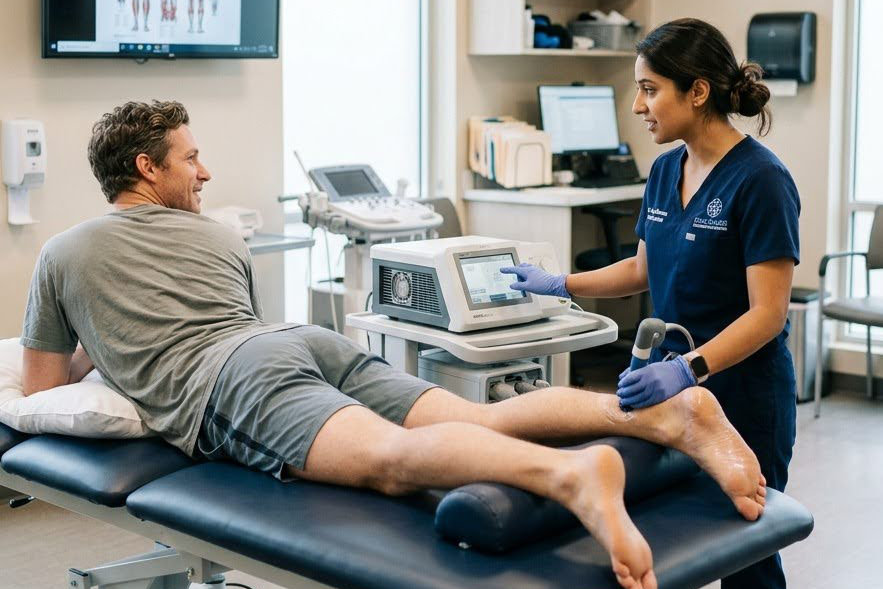
During the treatment, your practitioner will apply a conductive gel to the targeted area. This gel helps the acoustic waves transmit efficiently through the skin and into the underlying tissue. The shockwave applicator is then placed against the skin, and the device delivers the acoustic pulses.
The sensation
You will hear a rapid clicking sound from the machine and feel a tapping or pulsing sensation on your skin. Because the therapy is stimulating a biological response in an already tender area, you may experience mild to moderate discomfort during the application. However, the intensity is fully adjustable. We communicate with you continuously to ensure the discomfort remains at a manageable level. A typical session lasts only five to ten minutes per treated area.
Post-treatment care
After the session, you might experience temporary soreness, redness, or a slight throbbing sensation in the treated area. This is a normal part of the physiological response. We generally advise avoiding high-intensity, impact-heavy activities for 24 to 48 hours following a session. It is also recommended to avoid using anti-inflammatory medications or ice immediately afterward, as these can blunt the natural healing response the shockwave therapy is designed to promote.
Practical advice for movement-based recovery
While shockwave therapy is an excellent tool for stimulating tissue repair, it is not a standalone cure. True rehabilitation requires an active, movement-based approach to ensure your tissues can handle the demands of your sport.
Embrace active rehabilitation
Tendons and muscles need to be loaded to adapt and grow stronger. Once shockwave therapy helps reduce your pain levels, it is crucial to follow through with the specific exercise therapy prescribed by your practitioner. This often involves isometric holds, eccentric loading, or heavy slow resistance training to rebuild tissue tolerance.
Manage your training load
Many sports injuries occur due to training errors—such as increasing mileage, weight, or intensity too quickly. As you recover, work with your healthcare provider to develop a gradual return-to-sport plan. Managing your load means doing enough activity to stimulate adaptation without exceeding your tissue’s current capacity.
Listen to your symptoms
During recovery, not all pain is a sign of tissue damage. A mild ache during or after your rehabilitation exercises can be normal, especially for tendinopathies. However, if your pain sharply increases or lingers for days after activity, it is a sign that you may be pushing too hard and need to adjust your program.
When to seek professional assessment
Muscle soreness after a heavy training session or a new physical activity is a normal part of athletic adaptation. This type of delayed onset muscle soreness (DOMS) typically resolves within 48 to 72 hours. However, recognizing the difference between standard soreness and an injury that requires attention is important for long-term athletic health. You should seek a professional assessment if:
- Pain persists for more than a week: If you have localized pain, particularly around a tendon or joint, that is not improving with rest and activity modification.
- Morning stiffness is severe: If taking your first steps in the morning causes sharp, localized pain (a common hallmark of plantar fasciitis and Achilles tendinopathy).
- Your sporting performance is declining: If pain is causing you to alter your running gait, modify your lifting technique, or sit out of games and practices.
- You experience a sharp, sudden onset of pain: While shockwave therapy is primarily for chronic conditions, acute injuries require immediate assessment to determine the extent of tissue damage and establish a safe recovery timeline.
- Previous treatments have failed: If you have tried extended periods of rest, stretching, or other conservative measures without seeing meaningful improvement in your chronic injury.
Conclusion
Dealing with a stubborn sports injury can be a setback, but it does not have to be a permanent roadblock. By utilizing evidence-informed interventions like shockwave therapy in conjunction with an active, individualized rehabilitation plan, you can support your body’s natural healing processes and regain your physical function.
At Encompass Sports Therapy, we focus on collaborative care and movement-based recovery. We want to help you understand your injury, manage your pain, and build the strength necessary to return to the activities you enjoy. If you are struggling with a persistent sports injury in Calgary and want to learn if shockwave therapy is right for you, visit us at encompasscalgary.com to schedule an assessment.
Frequently Asked Questions (FAQ)
Does shockwave therapy hurt?
Patients often experience mild to moderate discomfort during the treatment, as the acoustic waves are targeting tender, injured tissue. However, the intensity of the machine is fully adjustable. Your practitioner will work with you to ensure the sensation is tolerable, and the discomfort usually stops as soon as the session is over.
How many sessions will I need?
The number of sessions required varies depending on the specific condition, how long you have had the injury, and how your tissue responds. On average, a standard treatment protocol involves three to six sessions, spaced roughly one week apart. Many patients report noticing an improvement in their symptoms after the second or third visit.
Are there side effects after a treatment?
The most common side effects are temporary and localized. You may experience mild soreness, a dull ache, slight redness, or minor bruising in the treated area for a day or two following the session. This is a normal biological response indicating that the healing process has been stimulated.
Can I continue playing my sport while receiving shockwave therapy?
This depends on the severity of your injury and the demands of your sport. We generally recommend avoiding high-impact or heavily loaded activities on the specific treated area for 24 to 48 hours post-treatment. Your practitioner will provide individualized advice on how to safely modify your training routine while undergoing therapy.
Is shockwave therapy covered by my insurance?
Shockwave therapy is typically billed under your standard physiotherapy or chiropractic care benefits, depending on the practitioner administering the treatment. It is advisable to check with your specific extended health insurance provider to understand your coverage details for these services.