
Shockwave vs. Laser Therapy for Tennis Elbow in Calgary
Living with tennis elbow transforms simple tasks into daily challenges. Gripping a steering wheel, lifting a grocery bag, or typing at your desk can trigger a sharp, burning pain on the outside of your arm. When rest and ice stop working, you need a more targeted approach to heal the irritated tendon.
At Encompass Sports Therapy in Calgary, we utilize advanced treatment technologies to accelerate tissue repair. Two of the most effective options for lateral epicondylitis (tennis elbow) are shockwave therapy and laser therapy. Both tools offer excellent, evidence-informed paths to pain relief, but they work in very different ways.
If you are unsure which treatment suits your specific elbow pain, this guide breaks down how each therapy works, their key differences, and how they fit into a comprehensive recovery plan.
What is Shockwave Therapy?
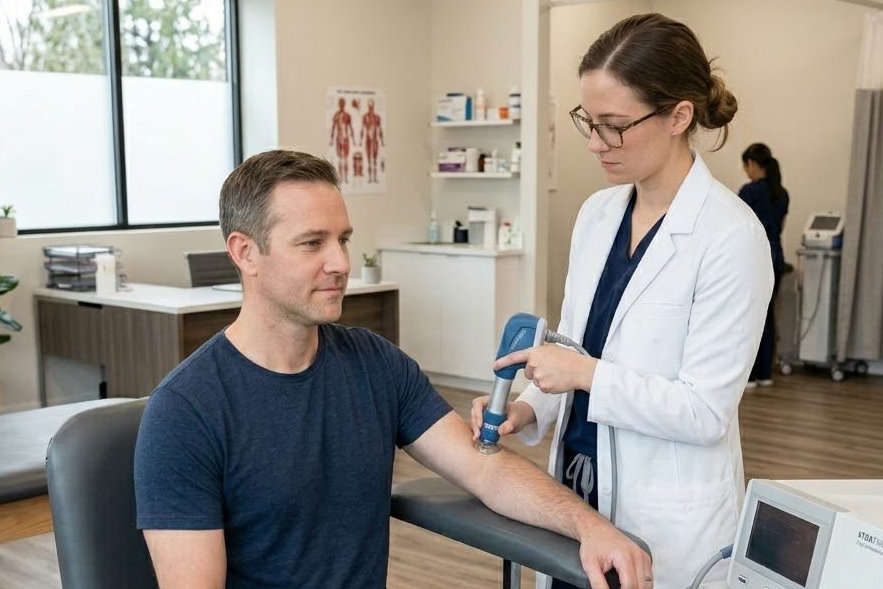
Shockwave therapy uses a specialized device to deliver high-energy acoustic waves directly into your injured tendon. Despite the name, it does not use electrical shocks. Instead, it uses sound waves to create microscopic physical stimulation within the damaged tissue.
This acoustic energy triggers a process called neovascularization, which encourages your body to form new blood vessels. Increased blood flow brings fresh oxygen and nutrients to the stubborn tendon, jumpstarting your natural cellular repair cycle. Shockwave therapy is highly effective for breaking down old scar tissue and stimulating recovery in tendons that have stopped healing on their own.
What is Laser Therapy?
Class 4 Laser Therapy takes a different approach by utilizing specific wavelengths of light energy. This process, known as photobiomodulation, penetrates deep into your forearm muscles and elbow joint without creating any physical impact or friction.
When the light energy reaches your damaged cells, it boosts their energy production. This accelerates tissue healing, rapidly decreases local inflammation, and soothes irritated nerves. Laser therapy provides a gentle, soothing warmth during treatment, making it an excellent option for highly sensitive or acutely inflamed elbows.
Key Differences: Shockwave vs. Laser
While both therapies aim to heal your tennis elbow, they rely on different mechanisms and feel entirely different during a session.
- Treatment Mechanism: Shockwave uses mechanical sound waves to physically stimulate the tissue. Laser uses light energy to create a photochemical reaction inside your cells.
- Sensation: Shockwave therapy can feel intense or mildly uncomfortable, similar to a deep tissue massage over a tender spot. Laser therapy is completely painless and usually feels like a gentle, relaxing warmth.
- Best Use Case: Shockwave excels at treating chronic, stubborn, or calcified tendon issues that have lingered for months. Laser therapy is often preferred for acute flare-ups, severe inflammation, or highly sensitive nerve pain.
Which Treatment is Right for You?
Choosing between shockwave and laser therapy depends heavily on the current state of your tennis elbow.
If you have been dealing with a dull, persistent ache for six months and your tendon feels thick and stiff, shockwave therapy is likely the better choice to break the cycle of chronic pain.
If you recently overdid it on a home project and your elbow is swollen, throbbing, and highly sensitive to the touch, laser therapy provides a gentle way to calm the acute inflammation before moving on to deeper treatments.
In some cases, our practitioners use both therapies at different stages of your recovery. We might start with laser therapy to reduce the initial swelling, then transition to shockwave therapy to remodel the tissue once the joint is less sensitive.
Building a Complete Active Rehab Plan
Technology is a powerful tool, but it is only one piece of the puzzle. At Encompass Sports Therapy, we never rely on a machine alone to fix your elbow. We integrate these therapies into a broader active rehabilitation plan to ensure your pain stays away for good.
To support your healing tendon, we combine technology with hands-on care and movement:
- Active Release and Manual Therapy: We release tight forearm muscles that pull on your elbow tendon, reducing mechanical stress.
- Dry Needling: We target deep muscle spasms to relax the tissues surrounding the joint.
- Kinesiology Taping: We apply supportive tape to unload the tendon, allowing you to grip and lift safely while you recover.
- Progressive Loading: We guide you through specific strengthening exercises to rebuild your tissue capacity, ensuring your elbow can handle daily physical demands.
You deserve to work, lift, and move without wincing. By combining the right technology with a targeted exercise plan, we help you regain a strong, pain-free grip. Book an assessment with our Calgary clinical team today, and let us help you find the best treatment for your tennis elbow.